


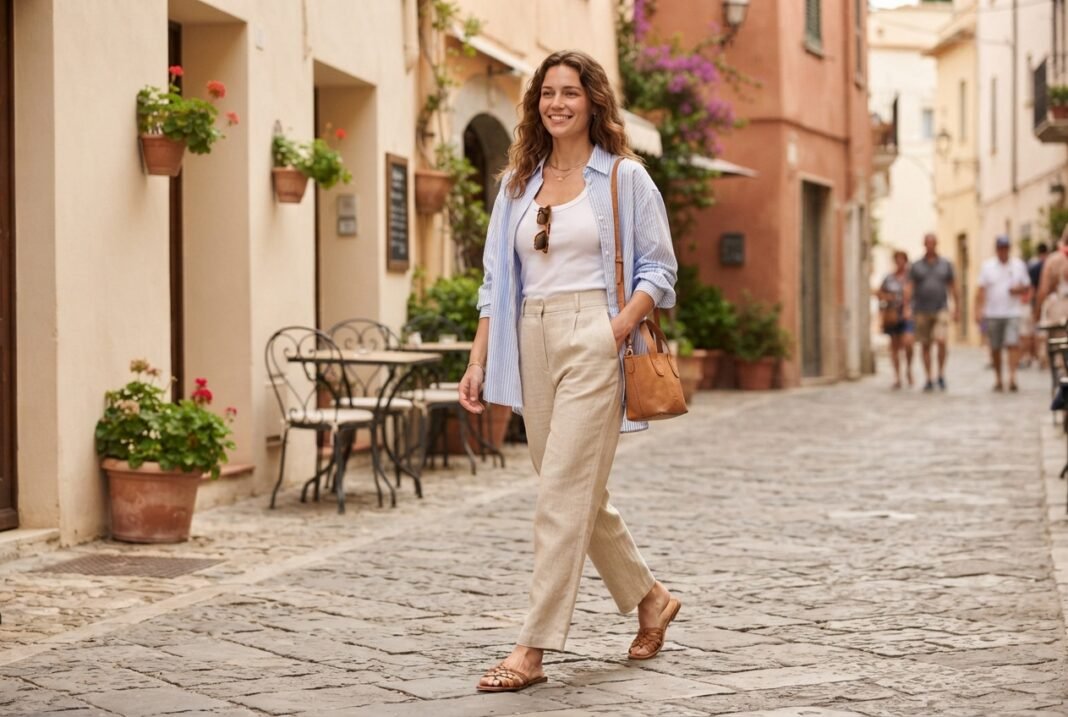

A pair of beige linen pants can work with several things already in your closet. The harder part is choosing a cut that feels comfortable and putting together an outfit that suits your day. A loose drawstring pair and structured trousers offer different starting points, even when the color looks similar.
For an easy casual outfit, start with a white T-shirt and sneakers or sandals. For a smarter look, try a navy shirt or blouse with loafers. Then check the details that matter most: how the waistband feels, where the hem falls, and whether the fabric gives you enough coverage.
Short direct answer
Pair beige linen pants with a white T-shirt and sneakers for casual days, or a navy shirt and loafers for a smarter look. Choose a pair with comfortable fit, suitable length, and enough coverage.
Practical Style Tip
The same pants can sit neatly over sneakers yet drag behind flat sandals. Try them with the shoes you wear most, and check the back hem while walking; one length may not suit every shoe.
AuraMagazine Mission Statement
AuraMagazine helps you make informed wardrobe choices that feel stylish, comfortable, and right for your budget. We share practical outfit advice and ways to adapt celebrity style to everyday life.
SERP enhancement element — Before-you-buy checklist
- Sit and walk to check waistband comfort and room to move.
- Try the length with the shoes you’ll wear most.
- Check coverage in bright light, including the back and pocket areas.
- Read the fabric details; pocket lining does not mean full lining.
- Review care instructions, return terms, and possible alteration costs.
Beige Linen Pants Outfit Ideas for Everyday Plans
You don’t need a separate wardrobe for linen pants. Start with the occasion and use the top and shoes to guide the look. These combinations offer options for men’s and women’s outfits, with room to adjust them to your taste.
A T-Shirt and Sneakers for Casual Days
Pair straight-leg or relaxed pants with a plain white tee and simple sneakers. White keeps the outfit light; navy gives more contrast. A striped tee adds interest without needing extra accessories.
Check where the shirt ends. A long, loose tee can cover much of the pants and their waistband. A shorter tee or a small front tuck makes the waist more visible, if that’s the look you prefer.
For wide-leg pants, try the sneakers before deciding on the length. The back hem should clear the ground when you walk. Swap the tee for a polo when you want a collar without adding a jacket.
A Light Shirt or Tank and Sandals for Warm Days
A cotton tank with wide-leg linen pants makes a simple starting point for warm days. Add flat sandals and a light shirt worn open when you want another layer. The tank can be close-fitting or loose; choose what feels comfortable.
A short-sleeve button-down with straight or relaxed pants offers another option. White, pale blue, and muted olive are useful colors to try. Leave the shirt untucked when its length sits comfortably around your hips.
Drawstring styles suit this relaxed direction, but check that the waistband stays secure as you move. For a day with plenty of walking, choose sandals you already know are comfortable, or use sneakers instead.
A Button-Down or Blouse and Loafers for a Casual Office
For an office that allows casual clothing, start with pants that provide enough coverage and fit neatly at the waist. A straight-leg or wide-leg trouser with a simple waistband can pair with a light blue button-down, navy blouse, or knit polo.
Loafers give the outfit a more finished appearance. Ballet flats or other closed-toe flats are alternatives, depending on your preferences and workplace.
Tuck the top when you want the waistband to show, but check for bunching underneath. A jacket can add structure for meetings. It won’t, however, make every pair of beach-style drawstring pants suitable for work. Let your workplace’s expectations guide the choice.
A Darker Top and a Light Jacket for Dinner
Try beige trousers with a black blouse, navy polo, or dark brown shirt for dinner. The darker top creates a clear contrast with the pants. Choose loafers, dressier flats, or sandals suited to the venue and weather.
Add a light blazer or cropped jacket when another layer is useful. You can also keep the outfit simple and let a belt, earrings, or a watch provide the finishing detail.
Try the combination while seated as well as standing. A waistband that digs in or a shirt that keeps pulling loose can become distracting during a meal. Comfort is part of making the outfit work.
How to Choose Colors and Shoes
Once you have a basic outfit, small changes can make it feel different. You rarely need to replace every piece. Start by changing either the top color or the shoes.
Pick Soft Neutrals or Add Contrast
White and cream create a gentle pairing with beige. Navy, black, and darker brown create a stronger difference between the top and pants. Light blue and olive offer color without making the outfit particularly bold.
| Top color | Effect to try | Simple pairing |
| White | Light and clear | White tee, beige pants, white sneakers |
| Cream | Soft, similar tones | Cream knit top, beige pants, brown sandals |
| Navy | Noticeable contrast | Navy polo or blouse, beige pants, loafers |
| Black | Strong contrast | Black tank or shirt, beige pants, black shoes |
| Light blue | Gentle color | Blue button-down, beige pants, tan flats |
| Olive | Muted color | Olive shirt, beige pants, brown shoes |
Beige varies from pale cream tones to deeper, browner shades. Hold the top beside your actual pants in daylight rather than relying only on online photos.
For a beige-on-beige outfit, try slightly different shades or textures. A smooth knit top beside textured linen gives the outfit some variety. Exact matching is an option, not a requirement.
Match Your Shoes to the Pant Length and Occasion
Sneakers and flat sandals are useful casual choices. Loafers, ballet flats, and dressier sandals offer alternatives for plans that call for a more finished outfit.
The important check is how the shoes meet the hem. Full-length wide-leg pants may need a different length for flat sandals than for heels. Cropped pants leave more of the shoe visible, making shoe color a more noticeable part of the outfit.
Try the pants with the shoes you’ll wear most often. Don’t choose a hem that drags with your everyday shoes just because it looks good with a rarely worn heel.
What to Check Before Buying Beige Linen Pants
Product photos help you judge a style, but they can’t settle every question about fit or comfort. Read the measurements and fabric details, then use a try-on to check how the pants behave on you.
Check the Waist, Leg Shape, and Length
Start with the waistband. It should feel secure without digging in when you sit. With an elastic or drawstring waist, check whether adjustment is possible and whether it stays comfortable after tightening.
Next, choose a leg shape based on the look and movement you want:
- Straight-leg: A fairly consistent width down the leg, useful for simple casual or smarter outfits.
- Wide-leg: More width through the leg, with extra attention needed at the hem.
- Tapered: A leg that narrows toward the ankle, worth checking for comfort around the calf.
These are options, not rules about which bodies can wear which cuts.
The rise is the distance from the crotch seam to the waistband. High-, mid-, and low-rise styles sit differently, so choose based on comfort and where you like your tops to meet the pants.
The inseam measures the inside leg from the crotch seam to the hem. Compare it with pants you already like. Petite and tall options may help, but read the actual measurements rather than assuming the label guarantees the right length.
During a try-on, sit, walk, and bend your knees. Check for pulling around the hips, pockets that gape, or a waist that slips. Sizing up or down may help, but a different cut can be the better answer.
Compare Pure Linen and Linen Blends
Check the fabric composition instead of relying on the word “linen” in the product name. Pure linen and blends can have different textures and ways of hanging on the body.
For example, UNIQLO describes its pure linen as having a crisp feel, while its linen-rayon blends have a smoother, more flowing feel. Its cotton-linen fabrics offer another option. These are descriptions of the brand’s materials, not a guarantee that every blend will behave the same way.
Use the fiber list as one clue, then assess the finished pants. Do they feel comfortable against your skin? Do you like their weight and texture? Are they easy enough to care for?
A higher linen percentage doesn’t answer all those questions. Neither does a higher price. Choose the actual garment that meets your needs rather than treating one fabric label as an automatic sign of quality.
Check Coverage, Lining, and Everyday Comfort
Try light-colored pants in bright light before removing the tags. Check the front and back while standing and sitting. Look for visible underwear, pocket outlines, and areas where the fabric pulls tightly.
Pocket lining is not the same as full lining. A listing may describe the fabric used inside the pockets without saying the legs are lined. For instance, this H&M product page lists its shell and pocket lining separately. Read those fields carefully.
Underwear close to your skin tone may make contrast less noticeable. It cannot make sheer fabric opaque, meaning impossible to see through. Choose the level of coverage that lets you wear the pants comfortably.
Feel the inner seams and waistband, too. Check whether the pockets hold what you need without pulling awkwardly. A pair that looks good but irritates your skin or needs constant adjustment may not earn much wear.
Before buying, also check:
- Whether the care routine suits your habits.
- Whether a return is possible after an indoor try-on.
- Whether hemming or another alteration adds to the cost.
- Whether several tops and shoes you own already work with the pants.
These checks help you judge value beyond the price tag.
Common Problems and How to Care for Your Pants
Some issues need a small adjustment. Others suggest that a different pair would serve you better. Identify the problem before trying to change the garment.
When the Fabric Feels Sheer, Scratchy, or Too Loose
For visible underwear, first consider whether the issue is color contrast, seams, or the fabric itself. Different underwear may reduce an outline. It won’t solve every coverage concern, and you don’t have to accept sheerness you dislike.
When coverage remains uncomfortable, consider an exchange for a different fabric or a lined style. A tailor can assess adding lining, but ask about cost and suitability before committing.
Scratchiness also deserves attention before you keep the pants. Check whether it comes from the main fabric, a seam, or the waistband. Don’t assume washing will definitely make an uncomfortable pair pleasant to wear.
For a loose waist, use an existing drawstring or a comfortable belt if the pants have loops. Otherwise, compare another size or ask a tailor about adjustment. Deliberately shrinking the pants is a poor way to target only the waist; you may also change a length or fit you liked.
Manage Wrinkles and Follow the Care Label
Some creasing is part of wearing linen. Aim for pants that look cared for rather than expecting them to stay perfectly smooth all day.
Read the care label before washing, drying, steaming, or ironing. The instructions apply to the complete garment, including its blend, lining, and other details. UNIQLO’s care guidance also emphasizes checking the product label before washing.
Where washing is allowed, follow the stated temperature and cycle. Remove the pants promptly and smooth them gently before drying as directed. Avoid leaving them crumpled in a laundry basket.
Heat can contribute to shrinkage, so don’t assume a dryer setting is safe for every linen garment. Follow the drying instructions rather than copying the routine used for another pair.
For pressing, use only the method and heat setting the label permits. If the pants require professional cleaning, or the instructions are unclear, check with the brand or a specialist cleaner before experimenting.
Frequently Asked Questions
Can You Wear a Linen Shirt With Linen Pants?
Yes. A white or light blue linen shirt can work with beige pants. Choose the fit of each piece deliberately: both can be relaxed, but check that the shirt length and pant hem look how you want. Different colors can separate the pieces without needing contrasting fabrics.
Should You Tuck Your Shirt Into Linen Pants?
Tuck it when you want to show the waistband or create a more defined outline. Leave it untucked when the shirt length works comfortably over the pants. A partial tuck is another option. Check for bunching, especially when the pants have light or thin fabric.
Can You Wear Beige Linen Pants in Fall?
Yes, when the weather feels comfortable for the pair you own. Try a light sweater, overshirt, or jacket with closed-toe shoes on mild days. Thin summer pants may feel inadequate in cold or windy conditions, even with a warm top. Choose for the weather, not just the season’s name.
Are Beige Linen Pants Suitable for a Wedding?
They may suit a casual daytime or relaxed outdoor wedding, depending on the invitation. Choose a well-fitting pair with suitable coverage and build the rest of the outfit around the dress code. Don’t assume adding a blazer makes casual linen pants appropriate for a formal or black-tie event.
Choose a Pair That Works With Your Wardrobe
Start with fit, comfort, and coverage, then think about the outfits you’ll repeat. Beige linen pants are easier to use when their length works with your usual shoes and their care needs fit your routine. Choose one familiar top, add the right shoes for your plans, and adjust from there.
Disclaimer
This guide offers general styling advice. Fit, sizing, preferences, budgets, and dress codes vary. Follow garment labels and brand size charts, and consult a qualified tailor or specialist cleaner when needed. Product prices and availability may change.