
A pair of linen pants can look relaxed on the hanger and feel surprisingly awkward once you put them on. The waistband might fit while the hips pull. A pale pair may show more than expected. And the flowing hem that looked lovely online can end up under your sandals.
Good linen palazzo pants give you room to move, the coverage you want, and a length that works with your shoes. Once those details are right, getting dressed becomes much easier.
Start with the fabric and fit, then build an outfit around where you’ll wear it. A simple tee, a button-down shirt, or a dressier blouse can each take the same pair in a different direction.
Short definition
Linen palazzo pants are loose trousers with very wide legs that flow from around the hips toward the hem. They come in pure linen or linen blends, with different lengths and waist styles.
Practical Style Tip
A pair that hangs neatly over heels may drag when you switch to sandals. Try your linen pants with your most-used shoes before deciding on the length. If the waist and hips fit comfortably but the hem is too long, ask a tailor about shortening it.
AuraMagazine Mission Statement
AuraMagazine helps you make comfortable, informed wardrobe choices with clear styling advice and wearable ideas. We make fashion and celebrity style easier to adapt to your taste, budget, and everyday life.
Quick buying checklist
- Read the full fiber percentages and care instructions.
- Compare waist, hip, rise, and inseam measurements.
- Sit and walk to check comfort and movement.
- Check light colours and pocket outlines in daylight.
- Try the hem with the shoes you expect to wear.
- Review return terms before washing or altering the pants.
What are linen palazzo pants?
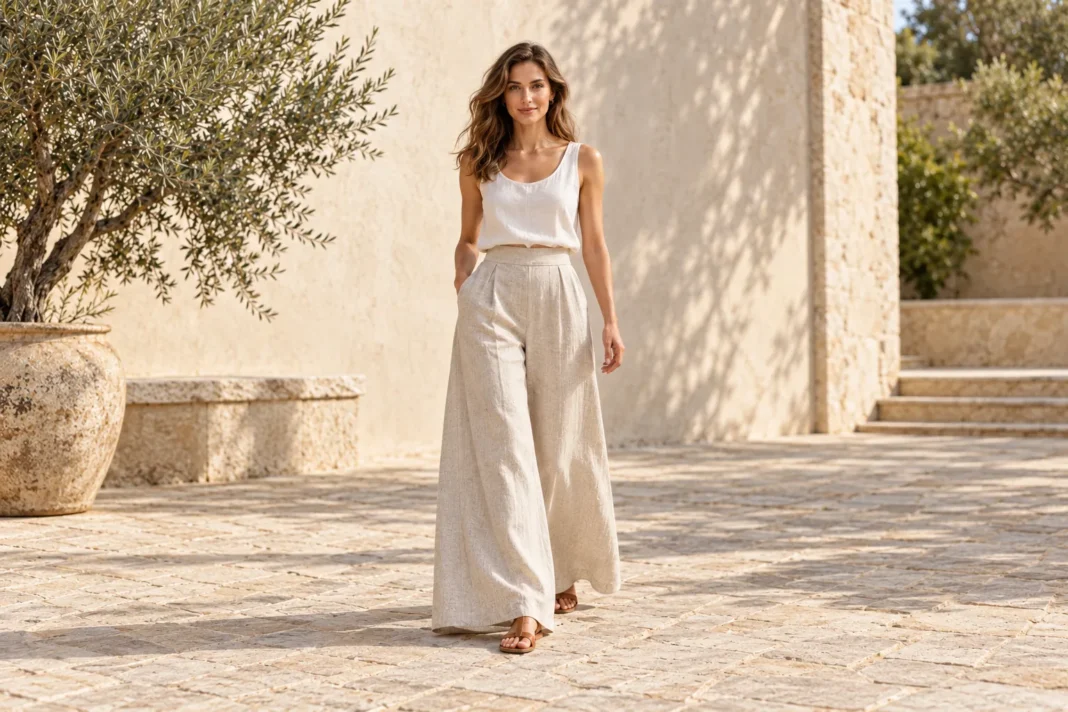
Linen palazzo pants have very wide legs that fall loosely from around the hips toward the hem. Their shape can look almost skirt-like when you stand still, with the separate legs becoming clearer as you walk.
“Palazzo” describes the cut. “Linen” describes the fabric, although a product may contain a linen blend rather than 100% linen. Check the fiber percentages instead of relying on the name alone.
Palazzo pants sit within the wider family of wide-leg trousers. Some wide-leg pants have a fairly straight shape, while palazzo styles usually have more fullness and movement. Retailers use these names loosely, so look at the photos and garment details.
Full-length versions create a long, flowing outline. Cropped pairs expose more of the ankle and shoe. Either can work; choose the shape and length you enjoy wearing rather than treating one as the correct option.
How to choose a pair you’ll want to wear
Think about the main job these pants need to do. A relaxed pair for vacation may call for different details than trousers you want to wear to work.
Before comparing colours or prices, decide which matters most: easy movement, a tidy appearance, adjustable sizing, coverage, or simple care.
Read the fabric label: 100% linen or a blend?
A 100% linen label gives you a clear starting point. A linen blend needs a closer look because the other fibers and their proportions vary.
For example, the researched Banana Republic palazzo style lists 66% viscose rayon and 34% linen. Athleta’s researched version lists linen, rayon, and spandex. Both contain linen, but they are different fabrics with different constructions and care instructions.
Use the composition as one clue, then consider how the fabric feels and hangs. This hanging quality is called its drape. A fabric that falls softly creates a different outline from one that holds its shape away from your legs.
| What you want to check | What to look for |
| Fabric content | The full fiber percentages |
| Movement | Photos or video showing the pants while walking |
| Stretch | Whether the fabric stretches or only the waistband does |
| Coverage | Lining details, close-up images, and colour-specific comments |
| Care effort | The actual washing, drying, and ironing instructions |
Cotton-linen pants may also be worth considering, but the blend name cannot tell you everything. Weight, weave, finish, and construction still affect how a pair feels.
Avoid assuming that a higher price guarantees a better choice. Clear measurements, useful pockets, suitable coverage, and a manageable care routine may matter more to your wardrobe.
Check the waist, hips, and length
Start with the waistband. It should stay in place without digging in when you sit. An elastic waist or drawstring can offer adjustment, but it does not guarantee enough room elsewhere.
Check the hips and upper thighs next. The fabric should fall comfortably rather than pulling across the body. Notice whether the pockets sit flat or flare open.
Try these movements before deciding:
- Sit in a chair and lean forward.
- Walk several steps at your normal pace.
- Bend your knees and step up.
- Put your hands in the pockets.
The rise is the distance from the crotch seam to the waistband. It affects where the waist sits and how the upper part of the pants feels. A high-rise pair may suit someone who likes waist definition, while another person may prefer a lower waistband.
For online shopping, distinguish body measurements from garment measurements. Follow the brand’s measuring instructions and compare a similar pair you already like where possible. Your usual size is a starting point, not a reliable fit guarantee.
The inseam runs along the inside leg from the crotch seam to the hem. Check it alongside the rise and product photos, especially when the design has a dropped crotch.
Petite, tall, and plus-size shoppers should look beyond the size label. A shorter inseam alone may not resolve a rise that feels too long. Likewise, going up a size to gain hip room can leave the waist too loose.
Finally, try the pants with your intended shoes. Full-length hems should clear the ground as you walk. Cropped pants can work well with flats because their shorter length makes hem clearance easier to judge.
Check coverage, pockets, and finish
Light colours deserve a careful try-on. Check white or beige linen palazzo pants in daylight, from the front and back, while standing and bending. Indoor lighting can make coverage harder to judge.
Underwear close to your skin tone may reduce visible contrast, but it cannot make sheer fabric opaque. Choose a pair with enough coverage for your comfort rather than relying on underwear to solve the problem.
Read whether the pants are lined. Then inspect the lining itself: where it ends, whether it feels comfortable, and whether it changes how the outer fabric falls.
Pockets need checking too. Their outline may show through a pale fabric, and a phone can pull a lightweight pocket out of shape. Test them with whatever you normally carry.
Before buying, look for loose threads, uneven stitching, and closures that are difficult to use. Review return terms before removing tags, washing the pants, or arranging alterations.
What to wear with linen palazzo pants
Choose a top and shoes that suit the setting, then check how the pieces work together. A closer-fitting top makes the contrast with wide legs easy to see. A loose shirt can also work when you like a more relaxed shape.
You do not have to tuck every top or wear heels. The useful question is whether the complete outfit feels comfortable and looks how you want it to.
For an easy daytime outfit
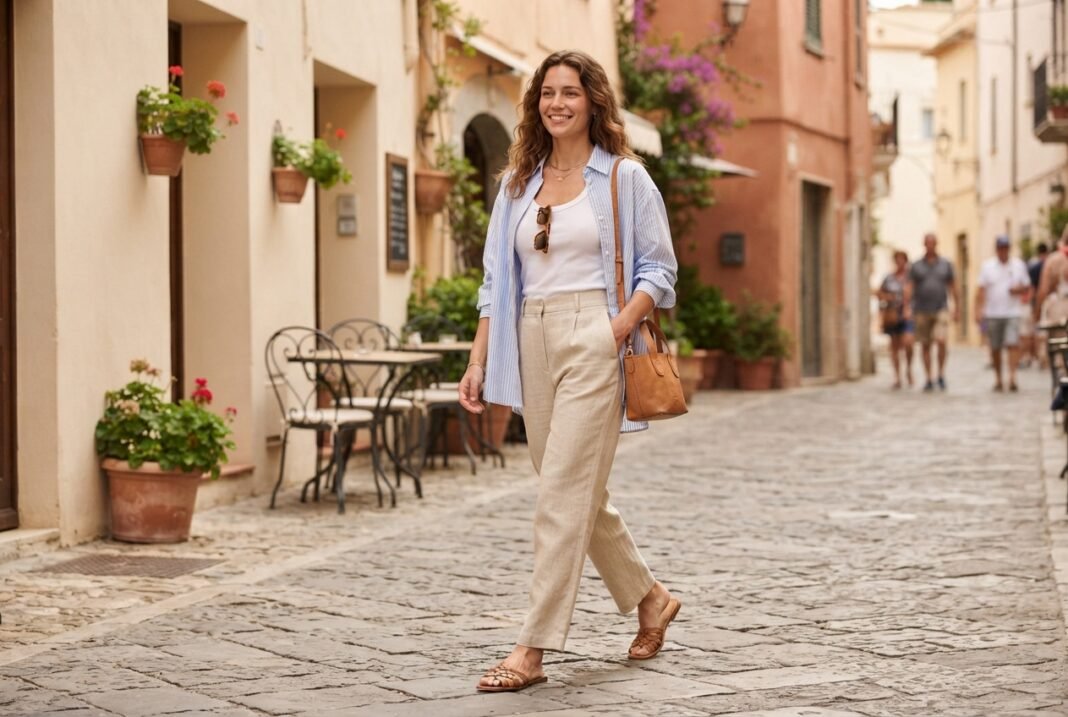
Try beige pants with a plain cotton tee and flat sandals. A partial tuck can show the waistband without gathering the whole shirt inside it.
For black linen palazzo pants, a striped tee and simple sneakers make another practical combination. Check that the hem stays clear of the sneaker sole when you walk.
A shorter top can sit neatly above a high waistband without exposing much skin. Look at where the pieces meet when you raise your arms or sit down, particularly if coverage matters to you.
Prefer a loose shirt? Wear a light button-down over a tank and leave it open. The separate layers give you options as the temperature changes. You can also wear the shirt closed and untucked if you enjoy that fuller shape.
A linen palazzo pants set offers another route. Try both pieces together, then check whether you would wear them separately. A matching shirt that works with jeans or shorts adds more outfit options.
Keep the accessories useful. Choose a bag that holds what you need and shoes you can comfortably walk in. The outfit should work for the actual day ahead.
For work or a polished daytime look
Begin with the workplace dress code. Linen pants may suit a relaxed office, while a more formal setting may call for a different fabric or construction.
For a tidy daytime outfit, pair black or navy pants with a button-down shirt and loafers. A waistband with a clean front can be useful when you want the shirt tucked in.
A simple knit top is another option. Choose one that sits smoothly at the waistband rather than bunching underneath it. With pale pants, check whether the tucked fabric shows through.
Add a jacket when the setting calls for it. A shorter jacket leaves more of the pants visible. A longer blazer creates a looser outline; check the combination from the side as well as the front.
Practical details matter here. Sit down in the outfit, check coverage, and make sure your shoes work with the hem. Consider how much creasing you are comfortable with during the day.
You may already own everything needed to finish the look. A plain shirt, comfortable loafers, and a bag you use for work can be enough.
For dinner or a summer occasion
For dinner, try black pants with a blouse that has an interesting neckline or texture. Add dressier flats or low heels, then check the length again.
A simple sleeveless top can also work with a full pair of trousers. Choose one accessory you enjoy, such as earrings or a bracelet, rather than feeling you need several new pieces.
For an outdoor event, think about the surface underfoot. Choose shoes that feel steady on grass, gravel, or uneven paving. Long hems also need enough clearance to stay out from under your feet.
Be guided by the invitation and venue for weddings or other events with a dress code. Linen has a relaxed appearance, and a dressier top does not automatically make every pair suitable for a formal occasion.
Avoid buying shoes solely to rescue trousers that are too long. When the pants otherwise fit well, ask a tailor whether shortening them would give you more ways to wear them.
Small choices that improve the whole outfit
A few adjustments can change how the pieces sit together. Try them before deciding that the trousers do not suit you.
Change the top length. A long tee may gather around the hips or cover a detail you like. Try a partial tuck, a shorter top, or an open layer. Compare those options with the untucked version.
Check the waistband with the whole outfit. A bulky tuck can feel uncomfortable or show through light fabric. A thinner top, a looser tuck, or an untucked style may work better.
Use colours you already wear. Beige pants can be easy to combine with white, navy, or other colours in your wardrobe. Black offers a clear contrast with pale tops. Green or brown can be equally useful when they fit your usual palette.
Choose the hem for real life. Check it while walking and turning, not only while standing in front of a mirror. If you switch between flats and heels, decide which you expect to wear most.
Avoid sizing down simply to reduce the fullness of the legs. Palazzo pants are meant to have volume. If the waist and hips fit but you dislike the amount of fabric, a less full wide-leg cut may suit your preference better.
How to care for linen palazzo pants
Read the garment’s care label before the first wash. Linen blends, linings, trims, and finishes can call for different methods. General linen guidance should support the label’s instructions rather than replace them.
Expect some creasing as you sit and move. Decide how much you mind it before buying, especially if you want pants for a setting where you prefer a smooth appearance.
When washing is permitted, follow the stated temperature and cycle. Check the drying instructions separately. A pair that can be machine-washed may still require line drying.
Heat can contribute to linen shrinkage, so avoid experimenting with hotter washing or drying to change the fit. Follow any ironing instructions and check whether steaming is suitable for that garment.
For alterations, speak to the tailor about the fabric and care routine before the hem is finalized. Bring the shoes you plan to wear. If the label requires specialist cleaning, include that ongoing cost when deciding whether the pants suit your budget.
FAQs
Are linen palazzo pants good for petite or tall shoppers?
They can work for either. Compare rise and inseam measurements, then check where the hem falls with your shoes. Petite or tall ranges provide useful options, but their measurements vary between brands. Choose based on the fit and shape you enjoy.
Are white linen palazzo pants see-through?
Some are, while others provide more coverage. Fabric construction, lining, and fit all matter. Check the exact pair in good light and while moving. Underwear close to your skin tone can reduce contrast, but it cannot correct fabric that feels too sheer for you.
What shoes go with linen palazzo pants?
Sandals, sneakers, loafers, dressy flats, and heels can all work. Choose for the occasion and your walking comfort, then check the hem. Full-length trousers need enough clearance to avoid catching beneath your feet. Cropped styles leave more of the shoe visible.
Do linen palazzo pants shrink?
They can, depending on the fabric, finish, and care method. There is no reliable shrinkage amount that applies to every pair. Follow the garment label, particularly its washing and drying instructions, and avoid assuming that a linen blend cannot shrink.
Conclusion
Choose linen palazzo pants by checking the fabric, fit, coverage, and length together. Sit down in them, walk in your usual shoes, and make sure the care routine suits you.
Then start with one outfit from clothes you already own. A comfortable pair, a familiar top, and suitable shoes give you a useful starting point—and make it easier to see what else you want to try.
Disclaimer
Fit, sizing, comfort, and style preferences vary. Check the brand’s measurements and garment care label, and consult a tailor or specialist cleaner when needed. Product details, prices, and availability may change.